
Tiny houses have been growing in popularity since 2014. A tiny house is usually between 100 and 400 square feet. People are making the switch to “tiny living” for the reduced environmental impact, and the freedom that comes with a small house to maintain. Tiny houses are more energy-efficient, and much easier to heat or cool than average-sized homes. They are also more portable, therefore tiny homeowners can really live anywhere there is land available. Adding solar to any tiny home will help further reduce the environmental impact and increase the possibilities of places you can live.
Solar For Tiny Homes
Solar for Tine Homes

Solar electric for tiny homes
It’s no secret that larger houses use more energy. The average American home uses 914 kWh of electricity per month. Tiny homes use about 120 kWh of electricity per month. This drastic difference is one of the many reasons people are making the switch to tiny living. Not only do tiny homes not use a lot of electricity, but they also are very easy to heat and cool. This makes the move to a tiny home a great decision for those looking to reduce their carbon footprint. By adding solar to your tiny home, you can further reduce your impact. Solar is a viable option for any home with access to sunlight. However, tiny homes require significantly less energy making them an even better candidate for solar. A system for a tiny house is far smaller than an average home so they take up less space. Panels can be ground-mounted, or roof-mounted (if there is enough roof space with sunlight).
Smart heating & cooling for tiny houses
Another way you can further reduce the environmental impact of your tiny home is by using heat pumps for heating and cooling. Heat pumps consist of an outdoor unit pulling air from outside the home, conditioning the air using a heat transfer liquid, and then pumping the heated or cooled air back into your home with an indoor unit. These are 100% powered by electricity so you no longer have to rely on finite resources to heat or cool your home. Heat pump systems are perfect for a tiny home because they do not take up a lot of space. They can also be powered by solar, making it easy to go off the grid and are environmentally friendly.
Go off the grid with solar
Solar energy systems with batteries for storage make going off the grid simple for tiny homeowners. Tiny homes are so portable that the possibilities are limitless with a solar system. Battery technology is constantly improving, and they are a viable way to store energy as a backup source. As mentioned above, solar can be used for electricity and heating/cooling your home. Solar can also be used to heat your water as well. Solar hot water systems are the perfect solution to heating water. Solar hot water systems use solar panels to covert the sun’s energy into thermal energy. This thermal energy is used to heat water that is stored in a tank until it is ready to be used. The water could be used for appliances in your home, or for baseboard hot water heating. Solar energy is a great solution for any homeowner looking to get off the grid.
Solar energy is a wise decision for any homeowner, but the benefits for tiny homes are astronomical. Tiny homeowners are saving money on home maintenance and helping the environment. Tiny homes also give owners a tremendous amount of freedom, due to their easy self-sustainability.
Is Solar Energy Really Worth It?
Is Solar Energy Really Worth It?
At the time of encouraging the discovery of different sources of energy, solar energy has become one of the most high-profile energy. According to the Solar Energy Industries Association, in 2019, there are more than 71 gigawatts (GW) of solar installed in the U.S., which is enough to power more than 13.5 million homes.
So let’s find an answer to the questions: Is solar energy really worth it?
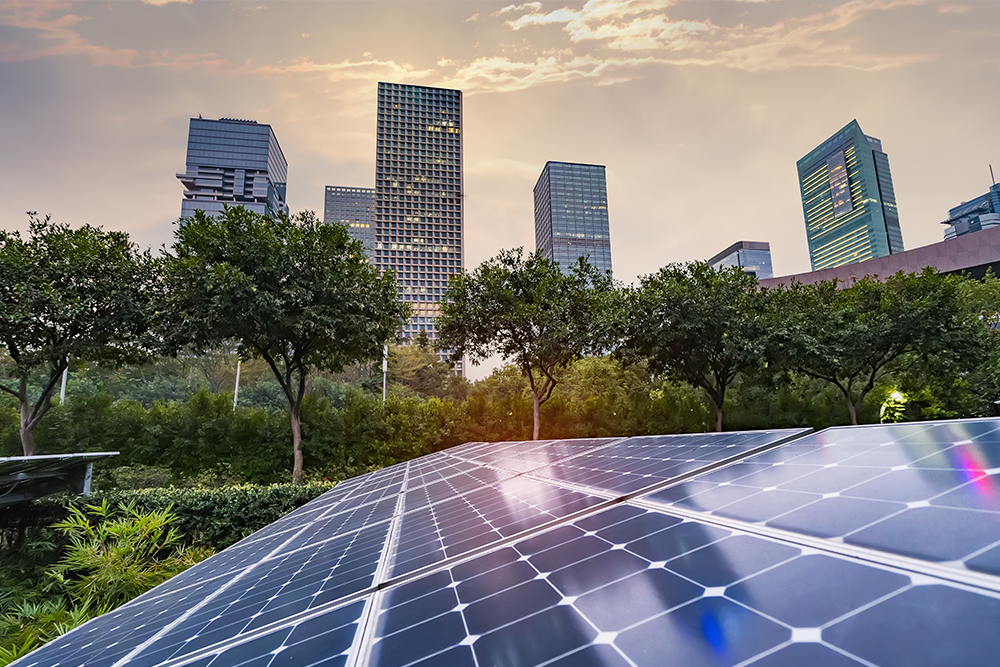
Solar energy overview
Over the last decade, the solar market in the United States has grown at an average rate of 50% each year. There are more than 2 million individual solar installations in the U.S., ranging from small home rooftop systems to large utility-scale systems that add hundreds of megawatts of clean electricity to the power grid.
As reusable energy generated from the sun, solar energy is popular not only because of its characteristic of being clean and helping to save money but also the ease and variety of ways of utilization. Aside from using photovoltaic to generate electricity, solar energy is commonly used in thermal applications to heat indoor spaces or fluids, for heating buildings or water.
History
Tracing back to the history of solar energy, the solar industry has experienced rapid growth in recent years. In 2009, less than 20 GW of solar capacity was installed worldwide, while in 2020, that number has skyrocketed above 480 GW—over 24 times larger in just over a decade. Rapid technological advancements have made this possible. In the same time frame, the cost of a fully installed system dropped from $7.14/watt on average in 2010 down to around $2.50/watt in 2020. That means you can go solar today for about one-third of what it would have cost ten years ago.
Today's use
Recently, solar energy has become more and more efficient, adding up to a considerable portion of its value, and this is a predictably continuous trend. Scientists have reported the development of multi-junction solar cells with an efficiency of more than 40%, a new world record for solar photovoltaic cells. They also predict that concentrator solar cells could achieve efficiencies of more than 45% or even 50% in the future, with theoretical efficiencies being about 58% in cells with more than three junctions. But an own system is also an investment. Is it worth it?
Benefits of solar energy
At the same time, using solar energy will also have a positive impact on the value of your home. According to a study, on average, solar panels raise a home’s value by 4.1% across the U.S.— that’s a boost of over $9,000 on a $226,300 home, according to the study. This analysis compared homes “with and without solar-energy systems that were listed for sale and sold from March 1, 2018, to February 28, 2019.” The study controlled for the home’s attributes, like bedrooms, bathrooms, square footage, age, and location, to determine an area’s solar panel boost. Does that make solar energy worth it?
Factors affecting solar energy use
On the financial side, going solar can reduce your electricity costs significantly or eliminate your bill. The savings with solar depend on several different factors:
1. What's the cost of energy in your living area?
What U.S. citizens on average pay for energy varies greatly from state to state. The average kWh costs 8.8 in Oklahoma. In Hawaii, on the other hand, it costs 32.8. More than three times the amount! In between are New York with 17.27 and California with 18.34.
Residential Electricity Rates by State (a selection)
- Oklahoma: 8.8
- Florida: 11.99
- Delaware: 12.25
- Maryland: 13.07
- New York: 17.27
- California: 18.34
- Hawaii: 32.8
We are getting closer to a positive answer to our main question: Is solar energy really worth it?
2. Are there any solar financial incentives offered in your state?
Homeowners who buy their solar panels — instead of leasing them — can claim a federal Investment Tax Credit (ITC) worth 26% of their purchase cost come tax season, a $6,000 return on a $20,000 home solar system. At the same time, different states have offered various financial incentives to encourage residents to install solar panels.
Some examples of solar tax credits & incentives
- Solar Energy System Equipment Credit in New York: 25% of qualified solar energy system equipment expenditures (limited to $5,000)
- New York State Solar Incentives: rebate rates of $300-$350 per kW of the total syszem size
- New York City Property Tax Abatement: after rebate – the value of saving is 20% of the total system cost
- Local utility solar rebates in California: up to $1.25 per watt
- Property Tax Abatement for Renewable Energy Property in Florida: a 100% property tax exemption for residential or 80 % for non-residential renewable energy property
- Solar and CHP Sales Tax Exemption: no sales tax on a solar energy system = 6% saving
Those are multiple reasons (on top of the positive environmental impact ) that make solar really worth it.
3. How much would you otherwise pay to your utility?
Price of electricity continues to rise, your savings will continue to grow each year. Electricity rates in California have increased by about 2% within a year. However, increases of over 20% can also be made. This means that if you buy a solar system for your home, all solar power generated by your system will be “free.”
Solar power cannot only reduce one of your most significant monthly expenses but stabilize your budget. Because electricity prices are unpredictable, it’s hard to manage your budget. By installing solar panel systems, you can also fix your electricity costs and make them more predictable. This is particularly beneficial for anyone with a fixed income, as well as for businesses that can benefit from more stable cash flows. As you make your electricity costs more predictable by using solar power, you also improve your ability to forecast and manage costs.
Therefore, where does solar energy make sense?
Sure, it makes sense in California and Florida with a huge amount of solar energy resources due to the geographical advantage. Taking California for example, by 2019, California has installed 26,232.25 MW, which is enough to power almost 7,000,000 homes. As for the northern parts like New York and Philadelphia, it still makes sense even though the winter is much longer and colder than the southern parts. This is because solar systems can produce energy even on cold days. As for the days with less sunshine, they are limited to a few months. In these few months, there is usually no continuous snow. At the same time, the low temperature doesn’t affect the productivity of solar panels. Not at all, it’s an advantage.
So – YES! Solar energy is really worth it.
Ready to go solar or do you have any more questions? Reach out!
Why Energy Rates are Rising and What Can You Do About it!
Why Energy Rates are Rising and What Can You Do About It!
Every year we see our electric rates continue to rise. New York State Electric & Gas (NYSEG) stated electric delivery rates will increase by 23.7% as early as May 2020. Articles of similar nature are being published in cities all over the country. We all see electric rates increasing in Florida, as legislation is being passed to make the electric grid more hurricane resilient. The increasing energy costs lead to homeowners all over the country asking the same two questions:
- Why is my electric bill rising?
- How can I save money on electricity?

Why is my electric bill rising?
There are several factors that affect electric rates. The largest cost of electric companies face is generating electricity. The maintenance and operations costs for operating a power plant continues to increase, and with that electric rates go up as well. The price of fuel is one of the driving forces that lead to increased costs to generate electricity. During periods of high demand for fuel electric rates go up due to the increased prices the electric companies have to pay to produce energy.
We also see increased electric rates when the demand for electricity goes up. The demand for electricity goes up in the summer when people are running their air conditioners, and in the winter when people put up their holiday lights. This leads to higher electric bills for consumers and more money for electric companies.

Weather conditions also play a huge role in the cost of electricity. Major storms can cause damage to powerlines and transformers. The cost of fixing these damages lead to higher costs for the consumer. Finally, regulations can affect the consumer's electric bill. Some states regulate electric rates so they are consistent statewide, while others allow customers to choose an electricity provider. States such as California, Delaware, and New York are some examples of states that are deregulated. Both regulated, and deregulated states face increased electric rates year after year. As there is no end in sight for these rising electric rates, consumers are looking for ways to save money on electricity.
How can I save money on electricity?
Saving money on electricity in 2020 may seem like an impossible task. Alternative energy may seem out of reach for many families financially. In reality, these are myths! It is a fact that solar energy can save consumers money long term.
New York, along with several other states have passed legislation to incentivize alternative energy. For example, in New York City, the green new deal has been passed to help make New York City carbon neutral by 2050. Another example of this is California passing a law that requires solar to be put on all new construction homes starting in 2020. Laws like this increase the amount of clean energy being put into the grid. Thus, lowering electric rates due to decreased cost for electric companies. Solar is one of the most easily accessible alternative energy sources for consumers. Laws implementing clean energy, and tax credits decrease the barriers to entry for solar. California has incentive programs to decrease barriers for low-income families to go solar. You can also check out our solar learning center cost-benefit page to learn more about tax credits.
Another solution is energy management. There are several simple steps you can take to reduce your energy consumption, including replacing incandescent light bulbs for LED alternatives.

Utility costs will continue to rise, and consumers must start thinking about alternatives to the current system. The factors that increase electric rates are out of consumers control, and it is time for homeowners to take control of this situation. Intelligent Green Solutions offers more than just solar installation, we are a company that prides ourselves on our energy management consulting as well. If you are ready to start learning about how you can start combatting rising energy rates reach out for a free quote today and follow our social media accounts for more energy-saving tips!
How Does Solar Power Affect the Economy?
How Does Solar Power Affect the Economy?
For homeowners and owners of commercial buildings, having their own solar system makes financial sense in most cases. Using solar power also has a positive affect on the local economy: Solar creates jobs and you can support your local economy.
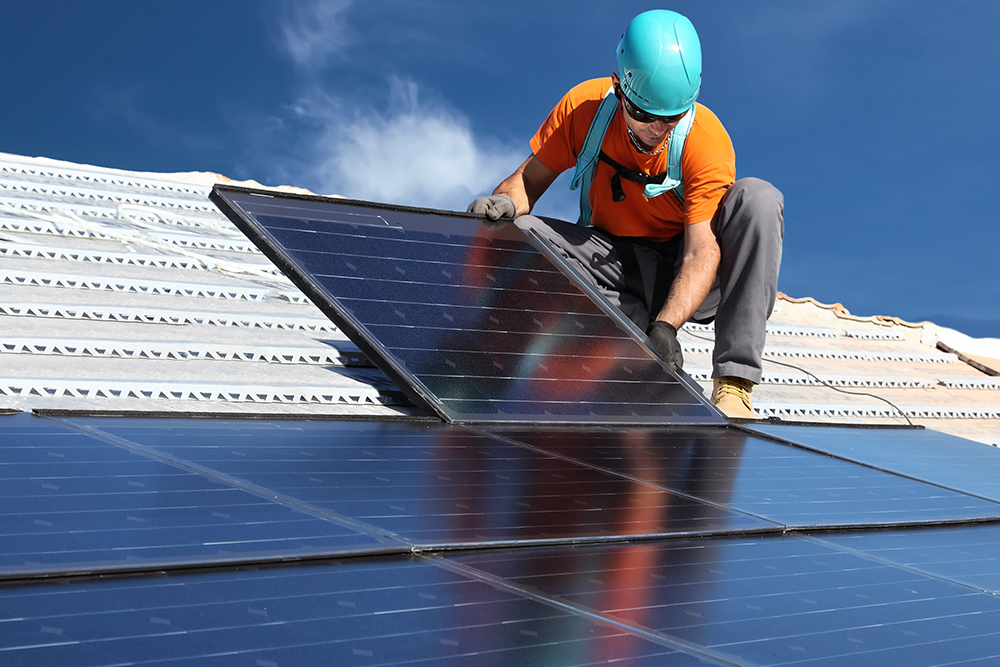
The solar industry provides a number of jobs. Many areas of the industry require local labor. Let’s take a look at some figures from the previous years (this refers to the USA):
- 7.29 million jobs in construction
- 18% of those involve work related to energy efficiency
- 242,343 full-time jobs related to the solar industry
- Solar employment grew 11% from 2013 to 2018
- Solar employment grew six times faster than overall employment
- As of 2018 Solar PV installer is the second-fastest-growing occupation
- The solar industry employs twice as many workers as the coal industry
- The renewable energy sector offers better-paid jobs for low and medium-skilled workers compared to other sectors
Contribute to your community
By having your own solar system installed, you also have the opportunity to contribute positively to the local economy. Take us as an example: whether in New York, Delaware, Florida or California – local installers will install your solar system. Our local Renewable Energy Specialists will guide you through your project.
Enlighten Energy supports local jobs
Our goal is to create jobs in the USA and likely to employ workers to strengthen the local economy. If this is important to you too, be sure to pay attention. Even though we wrote that solar power has a positive effect on the economy solar jobs do not always support the local economy. Many community solar projects are built by companies from states other than the one where it is actually built – just because it is cheaper. This has nothing to do with “community”. A pity!
Do you want to have a solar system installed by a family-owned, locally operating company? Fill out our form or contact us!
What are the Advantages of a Ground Mount Solar System?
What are the Advantages of a Ground Mount Solar System?
A ground-mount solar system or a roof system? What is the best option for you? Find out!
When you think of a solar system for your own house or business, you often have the image of solar panels on the roof in your mind. But you can build the solar system just as well on the ground. This can even have some advantages. Most installed solar systems are on the roofs of houses. Not everyone has the space on the property to have a solar system built on the ground. The roof is often the only option.

Have you thought about a ground mount solar system?
But if you have space, it definitely makes sense to think about it. For example, an installation on the ground is more flexible than one on the roof. So that the system can effectively produce energy.
- A roof may not be optimally aligned or it may even be too small.
- A ground-mounted system can be perfectly aligned to the required conditions.
Why you might want to consider a ground mount system
- Flexible and Easy: A solar system can be flexibly and easily installed on the ground, and accordingly it is more flexible to remove if desired.
- More Productive: Since the system can be perfectly aligned with the sun’s conditions, it may be more productive than a system on the roof. This also saves more money.
- Easy to reach: If repairs are ever needed, the system is easy to reach.
Both options are great solutions!
It is not possible to say in general which of the two systems is better than the other. It all depends on your individual situation. We appreciate your interest. We are here to give you the best advice. Together we can find out what options you have: Solar panels to be mounted on your roof. Or a system in your garden.
Comparison of Solar Energy to Fossil Fuels
Comparison of Solar Energy to Fossil Fuels
What are the advantages of solar energy in comparison to fossil fuels? Cheaper? More environmentally friendly? More reliable? Does switching to solar energy save money? Is a solar power plant reliable in generating electricity? Does solar energy have a positive effect on the environment?
We provide the answers.

Is solar energy cheaper than fossil fuels?
There is no general yes or no to this question. Unfortunately, there are cases where solar energy is not cheaper for the individual. Nevertheless, we have made the experience that it is worthwhile for most people to switch to solar energy. Because it is actually quite simple: You have to pay for the electricity you use anyway. So every month a certain amount of money goes to the electricity provider. Instead of paying this amount monthly to someone else (and the money is gone), you can also invest it in your own solar system. And thus invest in the value of your own building.
Furthermore, energy costs are rising. They have been rising for many years and they will continue to rise. For solar, on the other hand, there are different tax benefits nationwide and different incentive programs depending on the state you live in. Our renewable energy experts will be happy to help you if you would like to answer the question for yourself. Be it residential solar or commercial.
Is solar energy reliable?
An exciting question. After all, you don’t want to sit in the dark just because a cloud moves in front of the sun and the solar system cannot produce energy.
There was a time when concerns about the reliability of production were well-founded. Nowadays, however, solar panels cannot be compared to the early days of solar systems. They are much more effective. Studies show that the reliability of solar panels is excellent.
Whether a solar system is a reliable energy source for you depends on individual details. Do you want to install solar panels on your roof – which direction faces your roof? The more direct sunlight, the better, of course. But this does not mean that a roof that is not facing south is not suitable for a solar system. Alternatively, the system can be built on your property as a ground installation. This gives you more possibilities to align the panels in the best possible way. There are other components to consider. Is there a lot of shading on the property, for example from trees?

Which energy source is best for the environment?
Let’s look at different energy sources to answer this question. We will concentrate on some of the most common energy sources to give you an overview. Of course, there are other energy sources.
Coal
Coal is certainly bad for the environment. Whether reliable and cheap or not, coal is definitely not a good, sustainable source of energy in terms of its impact on the environment. It emits large amounts of greenhouse gases. The environment is also affected by mining and burning, just to name a few aspects.
Hydropower
No emissions are produced during energy production and large amounts of energy can be generated. However, dams are repeatedly built where the environment, be it nature or local residents, depend on the normal flow of water. Here Hydropower intervenes in the natural habitat and has a negative effect on the environment.
Petroleum
Petroleum also has high CO2 emissions. Furthermore, the amount of petroleum available is limited.
Solar energy
No environmental pollution is produced during the production of energy. Of course, this does not apply in the same way to production. And of course, this is also the case with the other energy sources mentioned in this list in different ways. However, in this article, we are concentrating primarily on solar energy, which is why we are taking a closer look at it again here.
Of course, energy has to be generated to produce the solar panels first. Also, different chemicals are used for production. However, in the long run, the environmental impact is less severe than with some other energy sources mentioned before. This is why we are convinced that we are doing something good for the environment with solar energy.
Uranium
Energy generated in nuclear power plants does not produce greenhouse gas or CO2 emissions. However, there is still no perfect solution for the storage of nuclear waste that is regularly generated. We do not even want to start talking about the possible consequences if there is an accident in one of the nuclear power plants. So there is still room for improvement here!
Wind Energy
No emissions. Has only a minor impact on the ecosystem – it depends on where it is built. But it does not make sense to install wind turbines everywhere. And of course, not everyone can just put a wind turbine in their garden – it requires a larger area of land.
Conclusion
So, does solar energy make sense overall? Does it make more sense than fossil fuels? Does it make sense to switch to solar energy? We answer these questions with YES! How it looks like in the individual case financially and concerning the productivity – we will find out for you.
Rising Energy Costs in New York
Rising Energy Costs in New York
Besides NYSEG, Central Hudson is also increasing the costs of electricity. How to save despite rising energy costs?

NYSEG will continuously increase the prices of electricity in the coming years. For NYSEG customers, costs could increase up to 23.7% in the near future. You can read more about this in our News Section. Central Hudson is also continuing to raise the price of electricity. This already happened in July 2019, by 10%. A further 10% followed in 2020. In addition, the cost of supply is increaing. It becomes clear: electricity will not become cheaper. The costs are rising. And so does your monthly amount on your bills.
Energy costs rises continously
Be aware that electric rates are rising continuously. And will certainly continue to do so. This is unfortunately true. And you can easily look at it and see it clearly.
One example of how much more you will pay for electricity
Suppose you pay $150 a month for electricity, you will pay $98,000 in electric with just 6% escalation each year (average). With increases like 10%, that number is well over $ 150,000! So how do you save on electricity? Unfortunately, there is nothing you or we can do about the fact that they are rising. Of course, there is the option to use less electricity. But with this, it’s hard to save so much that the rising costs of the power would not be noticeable. Instead, there is another possibility. Produce your own electricity with your own solar system. This way you won’t have to pay more to the power company every month. Instead, you pay to yourself and increase the value of your house.
Energy costs are rising - save money with going solar!
The best part is you don’t need to put any money down and New York State has one of the best tax credit offering to where in most cases 50% of the system is recouped in the first year! You are going to be paying for electric regardless – you might as well invest in your home. Let us summarize some pros for you:
- No money down
- Save ~$50,000 over 25 years
- Eliminate your electric bill for a smaller payment toward a system
- Add home value ~$25,000 (cant be taxed on the added value)
We are here to help you with advice and support.
Local Laws in New York City for More Solar
Local Laws in New York City for More Solar
New York City buildings are supposed to have more solar systems on the roofs and the city is supposed to become greener. Thanks to two local laws that came into force in November, solar panels will be obligatory on the roofs of new buildings in the future.
Two local laws for greener buildings
Two laws will provide for more solar panels in New York City. Since November 15, 2019, owners of new buildings must install green areas on the roofs, install a solar system, or a combination of both. Since last month, new applications for building projects have to comply with Local Law 92 and Local Law 94.
Also, alteration projects with a vertical or horizontal extension or renewal of a roof are affected.
New York City is therefore committed to protecting the environment. The move towards more solar energy is extremely important in this context. Currently, 70 percent of the greenhouse gas emissions in New York City come from building emissions but the goal is to be carbon neutral by 2050.
Solar laws help NYC be carbon neutral by 2050
Buildings Commissioner Melanie E. La Rocca and Deputy Mayor Laura Anglin are pleased, as newspapers report. Likewise environmental activist Pete Sikora from the local nonprofit organization New York Community for Change. Nevertheless, he argues that 90 percent of square footage to be built in the city by 2050 has already been initiated or built, and so the laws do not have to be applied to it. Instead, he suggests that not only new but also existing buildings should be affected.
The two laws, Local Law 92 and Local Law 94, are part of the Climate Mobilization Act (CMA). This Act was enacted by City Council in April 2019 as part of the Mayor’s New York City Green New Deal and OneNYC 2050 plan.
In the state of California, solar systems have recently become mandatory on new buildings. In the state of New York, New York City is making the start. Will the state follow?
The California Solar Mandate
The California Solar Mandate - All Information on the New Requirments Since 2020
California was the first state in the USA to require solar systems on the roofs of new buildings. The new regulation, the California Solar Mandate, came into force in 2020.
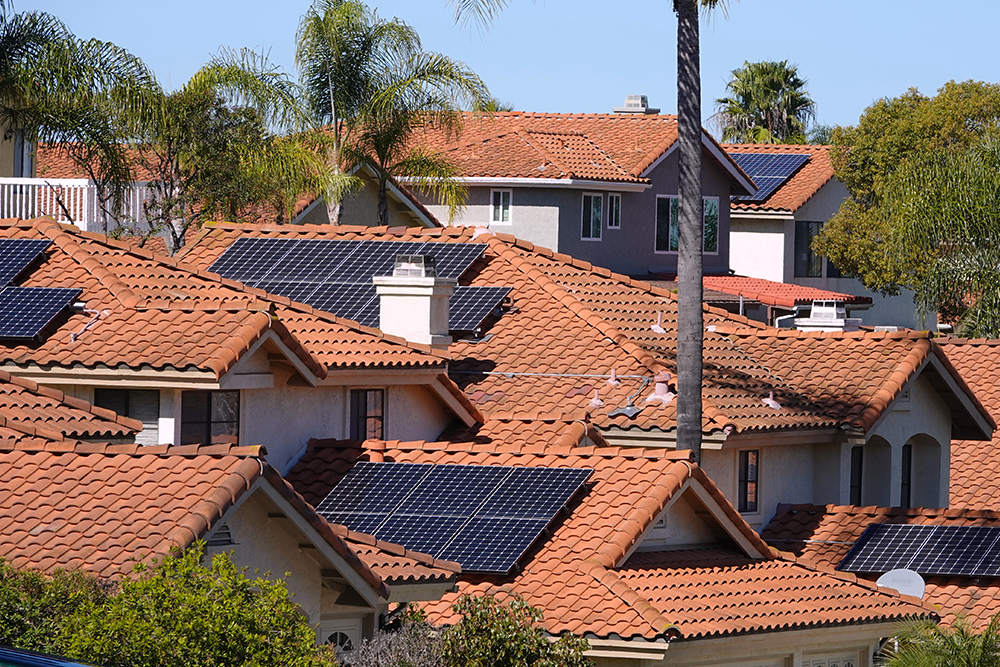
Solar power will no longer be just a possible add-on, but a standard that will save the homeowner money in the long run and improve the environment. California’s environmental policies are always acting as pioneers for the whole country. Hopefully this time too. The state has set itself the goal to get 100 percent of its used energy from renewable energies in order to drastically reduce greenhouse gas emissions. The California solar mandate, which is part of an initiative of the California Energy Commission, states that the 50 percent mark should already be reached by 2030.
We consider this an important step towards a greener future. We, therefore, support our customers in California with advice and the implementation of solar projects when California goes green. If you are planning to build your own home in California or you are a housing developer, we can help you build a solar system on a California house or property.
We try to answer some important questions:
1. Is it mandatory in California to have solar on new houses?
It is mandatory for all houses whose building permit has been applied for from January 1st, 2020.
2. Does the requirement apply to all types of buildings?
No, it only applies to buildings that are less than three stories high. Higher buildings are not obliged to do so.
3. How large does a solar system have to be to meet the requirements of the California Solar Mandate?
It must be able to compensate for 100 percent of electricity consumption. If other energy-efficient improvements have been made, such as energy storage or green building materials, the system can be correspondingly smaller.
4. Does this mean that you have to balance out electricity consumption 100 percent?
“Not quite. New dwellings don’t need to be zero net energy (with 100% of the home’s energy use offset by PV production). Instead, they must be designed to achieve zero net electricity, with 100% of the unit’s electricity production offset by solar.”
5. How much does a solar PV system cost?
The average price for a solar residential system is $2.85. That means a 10KW system is $28,500. On average, solar systems currently installed on homes in California are 6.8 kilowatts large.
6. What are the savings with solar?
Looking ahead to the next 30 years, solar panels on your roof will save you an average of $19,000. The value of your home will also increase. At the same time, the price of electricity will continue to rise, so you will save more and more. With your own solar system, you will no longer be dependent on the utility companies.
10 Solar Facts to Make You Brighter
10 Solar Facts to Make You Brighter
Ready for some fun under the sun? Let’s dive into these solar facts to make you brighter!
1. Solar is one of the cleanest and most sustainable energy sources
Our usage of fossil fuels has taken a toll on our environment and health – specifically through water, air, and global warming pollution. Drilling, fracking, and mining operations contaminate our drinking water and jeopardize ecosystems. Fossil fuels also emit harmful air pollutants. According to the CREA, fossil fuel air pollution in the United States led to 230,000 deaths and $600 billion in annual economic losses. Fossil fuels also contribute to climate change and global warming. However, solar is a clean energy source that offers none of these disadvantages. Going solar is a necessary step in building a clean energy future.
2. Solar is the most abundant energy resource in the world
In any given moment in time, the Earth is intercepting 173 thousand terawatts of solar power from the Sun. That is 10,000 times more than the world’s total energy use.
173,000,000,000,000,000 W
3. Solar prices have dropped by 80%
The price of solar has significantly dropped with each year. When solar was first introduced in the 1970s, it cost about $76.67 per watt. In 2008, it dropped to $7.60 per watt. Now, the average cost is as low as $2.75 per watt.
4. Solar is ranked either first or second in US annual additions of new electric capacity
Solar accounts for 40% of all new added electric capacity in 2019. In 2013, solar experienced a drastic surge in US installation. It made a jump from 9% of all new electric additives to 28% in just one year. Since then, solar has been on a steady increase. In 2010 it accounted for a 0.1% share of total US electric capacity but accounts for a 2.5% share today.

5. Solar energy experiences an average annual growth rate of almost 50%
Solar energy has experienced rapid growth in this past decade. In 2010, the cumulative US solar installation barely passed the 2,000 MWdc (megawatts of direct current) threshold. However, the US is about to hit the 100,000 MWdc milestones in 2020. This means that solar has an annual growth rate of 48%.

6. Solar panel payback periods are on average 8 years but can be as short as 4-5 years
Solar panel payback period refers to how long it takes to recover the cost of switching to solar. As of 2020, the average US payback period is 7.6 years. However, this period varies by the state due to the different offered electric rates and incentives. In fact, some states have payback periods as short as 4-5 years.
7. A solar-powered aircraft flew for 26 days
The Zephyr S HAPS (High Altitude Pseudo-Satellite) is an unmanned solar-powered aircraft. It has a flight time of 25 days, 23 hours, and 57 minutes. This broke the world record for the "longest duration flight ever made."
8. Solar sailing is a game-changer in space and might help us reach another star
Solar sailing is a method of propelling a spacecraft through space. It takes advantage of the photons found in light to give the spacecraft momentum to move. Its large reflective sails transfer the photon’s bounce off the sail into energy that pushes and pulls the spacecraft. By strategically angling the sails based on its relativity to the sun, the solar sail can control the direction it moves. Unlike rocket fuel, sunlight is limitless. This means that the spacecraft can theoretically travel forever. While the technology for interplanetary and interstellar solar sailing has not been developed, this feat could happen in the future.
9. (Partly) solar-powered cars will be available in 2021
Lightyear One is an electric car that aims to be the first-ever long-range solar-powered car. It is a plug-in electric vehicle with solar panels stretched across its roof. In the most optimal conditions, the solar panels could generate enough energy to travel over 12,000 miles annually. Having solar panels also means that owners won’t have to constantly plug in their cars to charge. Lightyear One is paving ways for the auto industry.
10. The reality of America's first solar-powered town is happening right now
Just northeast of Fort Myers, Florida is Babcock Ranch – America’s first solar-powered town. This suburban town is designed and built with a self-sustainability and pro-environment philosophy. From the 19,500 planned houses to self-driving shuttles, this entire town will be entirely fueled by the sun. A massive solar-powered farm with 350,000 solar panels that stretches across a 200 football-field-sized land will generate the town’s needs.
